
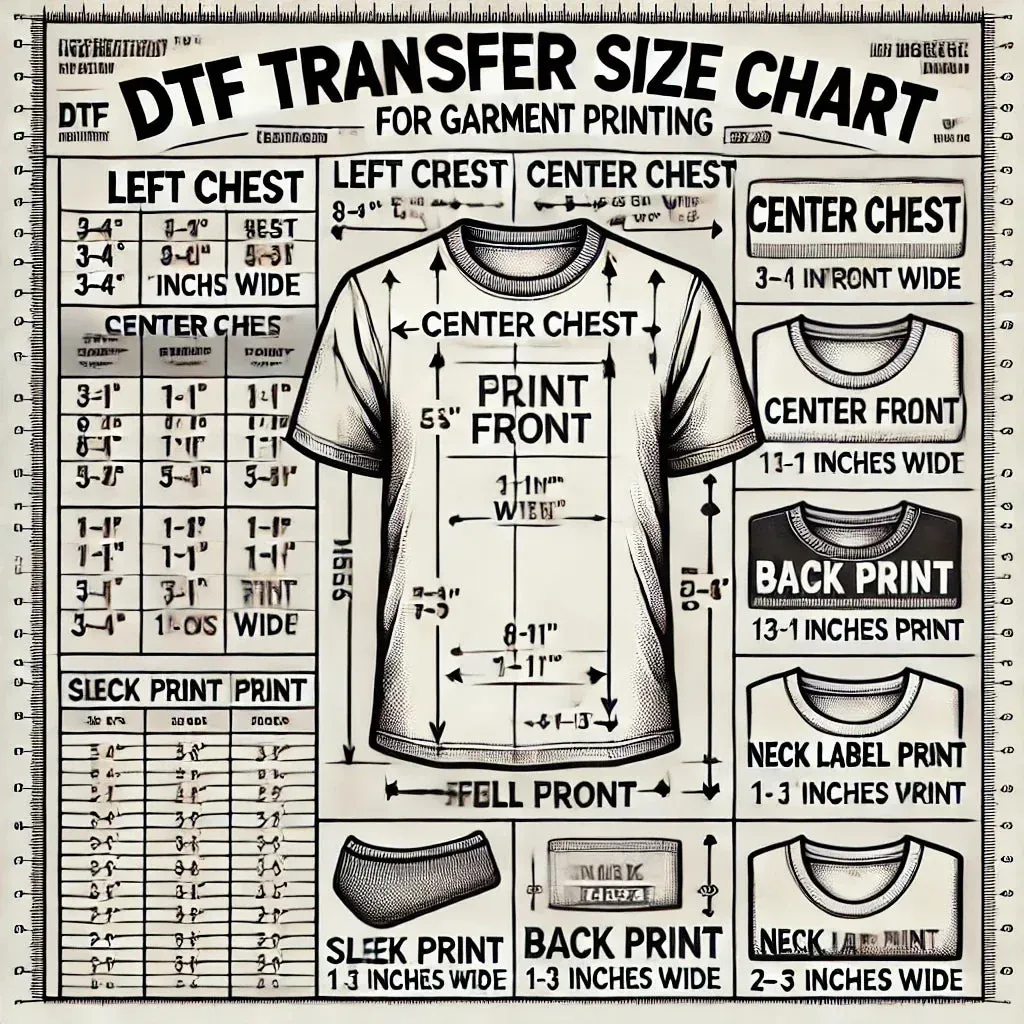
DTF Transfer by Size is a foundational concept for anyone serious about direct-to-film printing, shaping how designs read on shirts and textiles. A practical DTF transfer size guide helps you choose dimensions that maximize readability without crowding the garment. You can navigate DTF print size options by considering garment type, placement, and design complexity to preserve detail. This guide also covers how to choose DTF print size effectively, avoiding wasted ink, misalignment, and DTF transfer quality tips. By balancing space, legibility, and durability, you set up a consistent, high-quality result across your product range.
From a broader view, you can frame the concept in terms of transfer dimensions, print area planning, and garment-specific sizing. Size decisions influence how artwork translates across fabrics, ensuring logos stay legible from a distance on tees, hoodies, and bags. LSI-friendly terms like image scale, imprint footprint, placement strategy, and front- or back-facing layouts help creators align content with customer expectations. A thoughtful approach to these alternative concepts supports consistency, improves mockups, and strengthens branding across a merch line.
DTF Transfer by Size: Mastering Print Placement
Size is not just a number on a product spec; in DTF printing, the transfer size determines readability, balance, and perceived quality. A transfer that is too large can crowd the garment or overwhelm the wearer, while a transfer that’s too small may fail to communicate the design at typical viewing distances. To strike the right balance, designers rely on a DTF transfer size guide during concepting and production. This guide helps translate digital artwork into print-ready dimensions, taking into account garment type, cut, and placement options. By aligning your creative brief with the recommended print size options, you preserve legibility and detail while optimizing ink usage and wash durability. In practice, you’ll start by estimating an ideal width, then adjust height to preserve aspect ratio. The goal is a visually harmonious imprint that reads well on a customer’s preferred garment across sizes.
Once you have a size target, map it to common placements: chest logos, small emblems, full-front designs, or back graphics. Use the DTF transfer size guide as a starting point: chest logos often 2-4 inches wide on adult tees; full-front statements typically 8-12 inches wide; back designs can range 10-14 inches, depending on torso length. For hoodies and heavier fabrics, you may push toward the upper end of those ranges, but always check the fabric’s texture and color saturation that can alter perceived size. Remember margins near seams; add 1/8 to 1/4 inch safe space to prevent edge distortion. When in doubt, print a test garment and adjust the size up or down while preserving the same aspect ratio. This careful approach, guided by DTF print size options and practical mockups, helps you deliver consistent results across your product catalog.
Using the DTF Transfer Size Guide for Product Lines
To scale your operations, create a master sizing matrix that anchors all artwork widths to garment category and size. This is where the DTF transfer size guide becomes a living document: it informs decisions on front placement, back coverage, and sleeve art while keeping your brand proportions intact. Pair this with clear guidelines on DTF print size options so designers don’t guess when new artwork arrives. The matrix should cover adult and youth ranges, noting which widths remain readable across lighting and customer viewing distances, as well as how texture and fabric weight influence perceived size. With a standardized process, production runs stay efficient and customers receive uniform visual impact across platforms.
Consistency also means validating the approach with mockups and customer feedback. Use digital previews that show the chosen size on representative models, and publish the exact width (in inches) and placement notes on product pages. This aligns with the keywords and supports SEO by creating topic-rich product descriptions that reference how to choose DTF print size in practice. By tying product guidelines to the DTF transfer size guide, you build a scalable workflow that reduces errors and speeds up approvals across categories.
DTF Print Size Options Across Garments: From Chest to Back
Different garments demand different print footprints. Start with chest logos at 2-4 inches for subtle branding on adult tees, then scale up to 5-7 inches for mid-size front designs that remain legible yet unobtrusive. For a bold statement, full-front designs typically land in the 8-12 inch range, with height adjusted to maintain aspect balance on each garment size. Back graphics usually run 10-14 inches wide for adult sizes, but you adjust height to keep proportions harmonious with the wearer’s silhouette. On hoodies, where fabric texture and seam lines can distort color and edges, consider placing slightly larger designs (9-12 inches) to compensate for plush fabric and raised collars. These guidelines form a practical starting point that you customize with measurements from your own DTF transfer size guide and product specs.
As you adapt print sizes, remember that the same design may read differently on youth or plus-size garments. Always verify with a real mockup on the specific product, since curves, pocket placement, and sleeve length alter the effective width. When aligning with DTF print size options, also account for bleed and margins so edges stay clean and the artwork breathes within the printable area.
How to Choose DTF Print Size: A Practical Workflow
Choosing the right size should follow a repeatable workflow that minimizes guesswork. Begin with a high-resolution artwork that is vector-based or rasterized at 300 dpi or higher at the final print size. If you plan to scale, ensure the source file maintains quality, and consider rendering at the target width if vector. Next, define the garment’s printable area by measuring chest width, body length, and back length, noting any curves or seam obstructions. Use the aspect ratio as your guardrail: if the artwork has a fixed ratio, crop or resize to fit the window without distorting the composition. Finally, simulate the viewer distance with mockups to evaluate readability under real-world conditions and adjust accordingly. This process is the backbone of how to choose DTF print size in practice.
Make sure to run a physical test print on similar fabric before committing to a batch. A mockup is essential, but actual transfer thickness, heat, and fabric texture affect perceived size. If you see edge softness or color shifts at a given size, revisit the artwork density, scaling, and heat-press parameters. Employ a consistent review loop so every size category receives the same scrutiny and the end result maintains a uniform look, which is central to DTF transfer quality tips.
Quality Assurance for DTF Transfers: Tips for Consistency
Quality assurance is about preserving color, edge sharpness, and registration across sizes. Start by confirming you’re using the correct color profiles and printing on films with consistent thickness. Achieve reliable saturation and crisp edges by calibrating the printer regularly and testing at every size before you scale to production. Remember that smaller transfers may require denser color to maintain legibility, while larger ones demand balanced color separation to prevent oversaturation. This tight calibration is a practical application of DTF transfer quality tips and helps ensure a predictable result regardless of print size.
Additionally, implement a batch-test protocol: print multiple sizes on varied garments in a single run, check alignment, and note any drift or color shift. If you notice fuzzing along edges or bleed at specific scales, adjust ink density, curing time, or heat press pressure. Documenting these results creates a reusable playbook so your team can reproduce consistent outcomes across orders and maintain brand integrity.
Designing for Garments: Size-aware Artwork for Better Results
Effective design for different garment types starts with understanding how size affects perception. A tee, a hoodie, a tote bag, or a child’s shirt each has its own sweet spot for print width. Start with the DTF print size options in mind, then tailor the artwork to the garment’s real estate. For example, chest logos look crisp around 2-4 inches on adult tees, while back designs benefit from generous widths in the 10-14 inch range on larger bodies. Kids’ apparel should scale down proportionally, ensuring no element sits too close to seams or folds. By planning with size in mind from the outset, you guard readability and preserve the integrity of the artwork across product lines.
Collaterally, apply a bleed-aware workflow and margins to protect edges on all fabrics. Your mockups should reflect the final measurement, and your product pages should communicate exact sizes and placement to customers. Framing your design decisions with DTF transfer size guide principles and consistently referencing how to choose DTF print size will strengthen your brand’s credibility and help buyers visualize the finished look with confidence.
Frequently Asked Questions
DTF Transfer by Size: Why does size matter in DTF transfers?
DTF Transfer by Size directly influences readability, visual impact, and wearability. The right size ensures design detail is preserved and legibility is maintained at typical viewing distances. It also minimizes ink waste and reduces the risk of misalignment during heat application. Always consider garment size, placement, and audience when deciding the transfer size.
How to use a DTF transfer size guide to pick the right print size?
Start with the DTF transfer size guide to map garment size to recommended widths. Measure the printable area and set a target width before adjusting height to preserve aspect ratio. Use mockups to compare options and verify fit within the printable region. Align with DTF print size options to maintain consistency across products.
What are common DTF print size options for different placements?
Chest logo sizing typically 2 to 4 inches wide. Small to medium front designs usually 5 to 7 inches wide. Full front graphics often range from 8 to 12 inches, depending on the garment. Back designs can be 10 to 14 inches wide, with height adjusted for balance. Hoodies may be slightly larger due to fabric texture.
How to choose DTF print size for chest logos vs back designs using how to choose DTF print size guidance?
Choose by viewing distance and placement. Chest logos are viewed up close, so 2 to 4 inches works well; back designs should be larger for legibility from afar, up to 12 to 14 inches on adult garments. Maintain aspect ratio and leave safe margins to avoid crowding near necklines or seams. Use how to choose DTF print size guidelines to balance detail and garment proportion.
What are DTF transfer quality tips across sizes?
Aim for 300 dpi at the final print size to preserve detail, increasing to 360–600 dpi for fine text or line work. Calibrate color profiles and ensure film thickness aligns with the size. Run test prints at each size and adjust ink density and curing time as needed to keep edges sharp and colors vibrant.
How do mockups and testing support right sized DTF transfers using a DTF transfer size guide?
Create digital mockups for each size on representative garments to visualize fit and readability. Provide exact width and placement in product guides and run small test batches on similar fabrics. Review results, iterate sizes if needed, and document the process to ensure consistency across orders.
| Aspect | Key Points |
|---|---|
| Focus keyword | DTF Transfer by Size — central concept; size influences readability, visual impact, and perceived quality. Affects garment fit, placement (chest, front, back), and printer/heat press capabilities. |
| Related keywords |
|
| SEO-optimized post title | DTF Transfer by Size: How to Pick the Right Print Size |
| SEO-friendly meta description |
DTF Transfer by Size: learn how to choose the right print size for shirts and textiles, explore size options, and boost transfer quality. |
| Introduction Summary | A foundational concept in DTF printing, balancing transfer size with garment dimensions to maximize readability, impact, and quality across apparel types. |
| DTF Print Size Options |
|
| Choosing DTF Print Size: Practical Framework |
|
| DPI/Resolution Tips |
|
| Practical Guidelines by Garment Type |
|
| Bleed, Margins, and Printable Area | Keep safe margins (1/8–1/4 inch) inside printable area; account for seams and curves; print a mockup or test garment to confirm alignment. |
| Quality Control and Consistency |
|
| Mockups & Customer Experience | Use accurate digital mockups with size-specific views; provide exact width and placement guidelines on product pages to build trust. |
| Practical steps to implement |
|
| Branding & Consistency | A consistent size strategy strengthens brand recognition and reduces ambiguity in product listings. |
| Common Pitfalls |
|
Summary
DTF Transfer by Size plays a critical role in producing professional, market-ready apparel. By sizing transfers thoughtfully, brands ensure legibility from an appropriate distance, preserve design details, and maintain consistent quality across product lines. A deliberate approach to print size options, printable area, and mockups supports reliable outcomes—from chest logos to full-front prints—while reducing returns and increasing customer trust. Embrace a DTF Transfer by Size guide and apply transfer quality tips throughout production to elevate your merch and branding.