
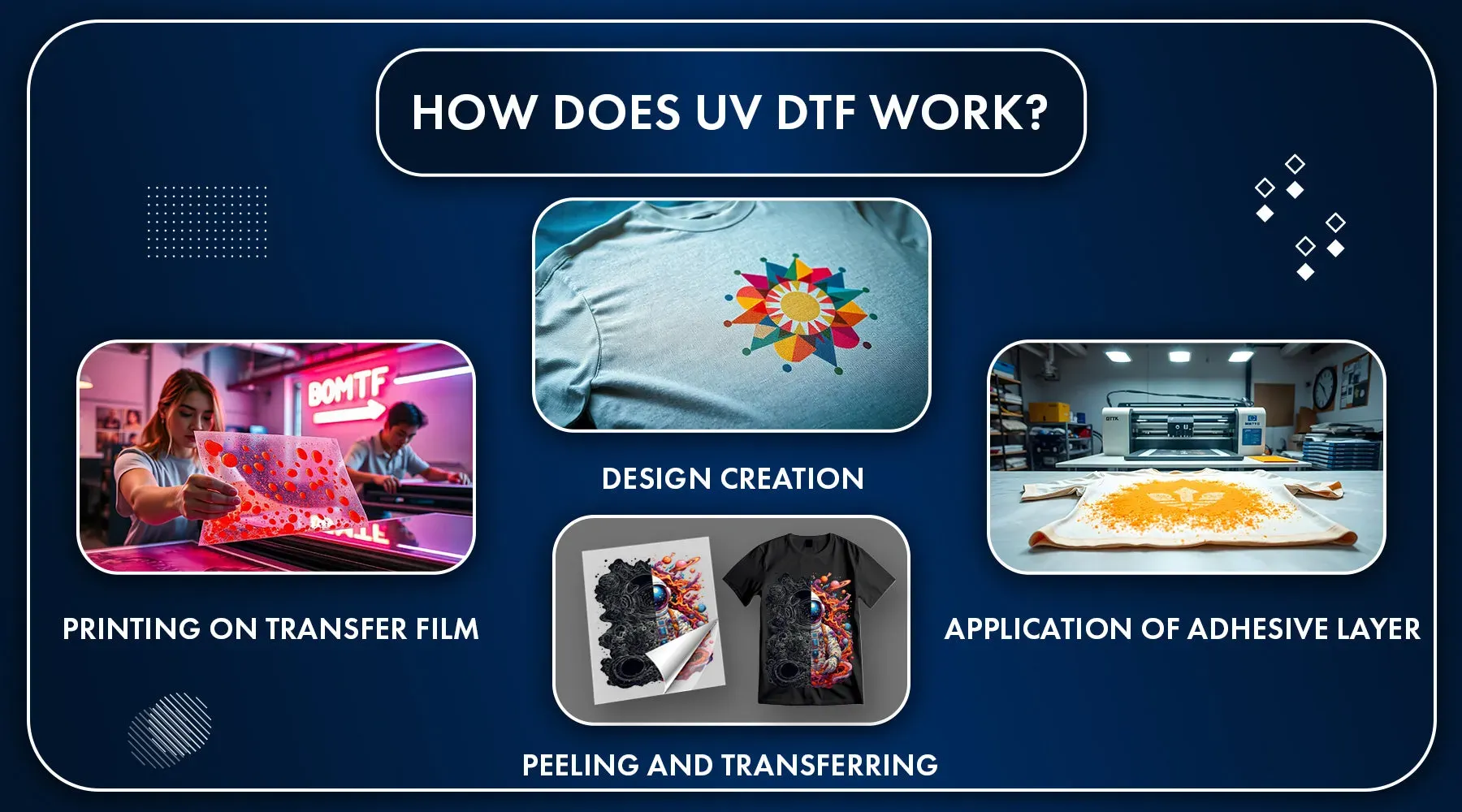
UV DTF transfers set a new standard for fabric graphics with intense color, sharp edges, and a fast cure that speeds up production. Compared with traditional DTF, UV DTF transfers use UV-curable inks that bond quickly under ultraviolet light, enabling faster production and more consistent results across UV printing on fabrics. The contrast between UV DTF vs traditional DTF influences texture, color fidelity, and fabric compatibility. Brand managers should weigh the faster cure against potential hand-feel changes and the broader substrate compatibility of UV inks. Understanding the cost of DTF transfers and the durability of DTF transfers helps you align your graphics with customer expectations and your budget.
Looking beyond the label, alternative terminology can help readers grasp the concept using Latent Semantic Indexing (LSI) cues. Ultraviolet-curable garment graphics refer to the same transfer process, where inks cure quickly with light and bond to fabrics, aligning with UV printing on fabrics in practical terms. Some suppliers describe this as UV-ink transfers, ultraviolet-cured textile imaging, or simply DTF transfers when discussing broad compatibility across materials. The aim is to present a clear, comparable view of how these methods relate to traditional DTF, focusing on durability, color fidelity, and production efficiency.
UV DTF vs Traditional DTF: Key Differences That Shape Your Brand’s Garment Graphics
UV DTF transfers are created with UV-curable inks printed onto a transfer film and then cured with ultraviolet light. When heat and pressure are applied in the garment transfer process, the inks bond to the fabric, delivering vivid color, sharp edge definition, and strong adhesion across a variety of fabrics. This makes the comparison of UV DTF vs traditional DTF particularly important for brands seeking bold visuals and fast turnarounds.
In contrast, traditional DTF uses water-based inks printed on a PET transfer film, followed by drying, peeling, and heat-setting to transfer the image. This approach is renowned for versatility, soft hand feel, and reliable image quality on light and dark fabrics. Understanding how the durability of DTF transfers and finish can differ between these methods helps brands align their choice with product lines and customer expectations.
DTF Transfers: Core Technologies, Films, and How They Apply to Your Line
DTF transfers rely on a core technology ecosystem that includes a PET transfer film, adhesive, and a curing/transfer process. This foundation supports both conventional DTF workflows and newer variants, with the film, powder, and press parameters shaping image detail, color fidelity, and adhesion strength. Brands often evaluate DTF transfers by how well they reproduce gradients and fine lines on a broad fabric mix.
As you plan production, consider the cost of DTF transfers within the broader ecosystem of films, powders, and presses. The traditional route benefits from a mature supply chain and scalable for high volumes, while UV-enabled variants may offer speed advantages for short runs. Weighing upfront equipment investments against per-unit costs is essential for sustainable profitability.
UV Printing on Fabrics: Color Realism, Edge Definition, and Fabric Interactions
UV printing on fabrics delivers vivid color saturation and precise edge definition, making it an attractive choice for complex artwork and logo-centric designs. The UV curing process locks in color quickly and can enhance finish options, supporting campaigns that require rapid proofs and fast deployment.
Fabric type and surface texture influence how inks bond and how the final hand feel reads. While UV methods excel in color realism and detail, brands should test on each fabric category to ensure proper adhesion, flexibility, and long-term durability across cottons, blends, and synthetics.
Durability of DTF Transfers: A Wash Test and Long-Term Performance Guide
Durability of DTF transfers depends on multiple variables, including fabric, adhesive formulation, transfer weight, and aftercare. UV DTF transfers often exhibit strong color retention and adhesion under exposure to light and routine wear, while traditional DTF can offer a softer hand in many cases. Understanding these durability nuances helps brands select the method that best matches their product expectations.
A practical durability plan should include multi-cycle wash testing, abrasion checks, and real-wear simulations to detect cracking, fading, or edge peeling. Document results and adjust finishing parameters, laundering guidelines, and material selection to ensure consistent performance across the product lineup.
Cost of DTF Transfers: Evaluating Upfront, Per-Unit, and Scale Economics
Cost considerations for DTF transfers are driven by upfront capital for equipment, inks, and consumables, as well as per-unit material costs. UV DTF can entail higher initial investments in UV curing systems and specialized inks, while traditional DTF equipment and consumables are often more accessible for a wider range of budgets.
At scale, per-unit cost is influenced by yield, fabric mix, and workflow efficiency. Short runs or fast campaigns may justify the higher upfront cost of UV curing due to faster turnaround, whereas evergreen products can favor traditional DTF for long-term cost efficiency. A thorough cost-per-unit analysis helps determine the best strategic fit for your brand’s economics.
Choosing Between UV DTF and Traditional DTF: A Brand-Driven Decision Framework
A practical decision framework starts with brand goals, product mix, and speed requirements. Compare UV DTF transfers and traditional DTF on representative fabrics and artwork to evaluate color accuracy, finish, and durability, using a data-driven approach that reflects your market strategy.
Develop a testing plan that includes sampling across fabrics, assessing how each method handles gradients and fine lines, and evaluating aftercare and wash performance. Engage trusted vendors for technical sheets and testing protocols, and consider a hybrid approach that uses UV DTF for limited runs with bold designs and traditional DTF for evergreen products to balance color, feel, and cost.
Frequently Asked Questions
What are the key differences between UV DTF transfers and traditional DTF transfers for UV printing on fabrics?
UV DTF transfers use UV-curable inks printed on a transfer film and cured with ultraviolet light, delivering fast curing, vivid color, and strong adhesion on a wide range of fabrics. Traditional DTF transfers use water-based inks on a PET transfer film with heat-activated adhesive and post-transfer curing, offering excellent detail and a softer hand feel on many fabrics. In short, UV DTF emphasizes speed and saturation; traditional DTF emphasizes versatility and softness.
How does the durability of DTF transfers compare between UV DTF transfers and traditional DTF?
Durability depends on the fabric, adhesive, and finishing, but UV DTF transfers typically show strong color stability and adhesion due to UV curing, while traditional DTF can deliver durable results with proper finishing. Wash care will vary by method, so follow vendor guidelines and test on representative garments.
Is UV printing on fabrics more expensive than traditional DTF, and is the cost of DTF transfers justified by performance?
Yes, UV DTF workflows often involve higher upfront costs for UV curing equipment and UV inks, which can raise cost of DTF transfers per unit for small runs. Traditional DTF equipment and materials are typically more affordable upfront, and can be cheaper at high volumes; the best choice depends on run length, color requirements, and speed needs.
Which fabrics and substrates work best with UV DTF transfers, and how does UV printing on fabrics affect color and adhesion?
UV DTF transfers perform well on cotton, polyester, blends, and some synthetic fabrics when paired with the right adhesive, but substrate testing is essential. Fabric choice affects color vibrancy, adhesion, and potential texture; heavier weights may feel stiffer, so test comfort and finish options (glossy or matte) to align with brand aesthetics.
What testing and sampling steps should brands run when evaluating UV DTF transfers vs traditional DTF?
Implement a structured sampling program: test UV DTF transfers and traditional DTF on representative fabrics (cotton, blends, polyester), assess color accuracy and edge definition, evaluate gradients and fine lines, run multiple wash cycles, inspect adhesion and edge peeling, and compute cost-per-unit across anticipated volumes.
When planning large-scale productions, how do production speed and scalability differ between UV DTF transfers and traditional DTF, and how does this impact cost of DTF transfers?
UV DTF offers faster cure times and shorter lead times, which benefits limited runs and campaigns and can improve throughput for quick-turn projects. Traditional DTF is more established for high-volume production with broad fabric compatibility and potentially lower unit costs at scale. Consider total cost of ownership, including equipment, materials, and labor, when deciding for large catalogs.
| Aspect | Key Points |
|---|---|
| Definitions and differences |
|
| Core processing differences |
|
| UV DTF pros |
|
| UV DTF cons |
|
| Traditional DTF pros |
|
| Traditional DTF cons |
|
| Durability, color fidelity, and hand feel |
|
| Finish options |
|
| Cost, production speed, and scalability |
|
| Application scenarios |
|
| Testing, sampling, and practical framework |
|
| Care instructions and longevity |
|
| Final decision path for your brand |
|
Summary
UV DTF transfers offer a compelling option for brands prioritizing vivid color, sharp detail, and fast production. This overview highlights that UV DTF transfers and traditional DTF each have strengths and tradeoffs, guiding a brand to select or combine methods based on design goals, fabric variety, and production realities. In practice, many brands adopt a hybrid approach: use UV DTF for limited runs with bold, intricate designs and traditional DTF for evergreen products and high-volume staples. By testing on representative fabrics and aligning the transfer choice with color accuracy, hand feel, wash durability, cost, and speed, you can ensure your apparel communicates your brand story with clarity and durability.