
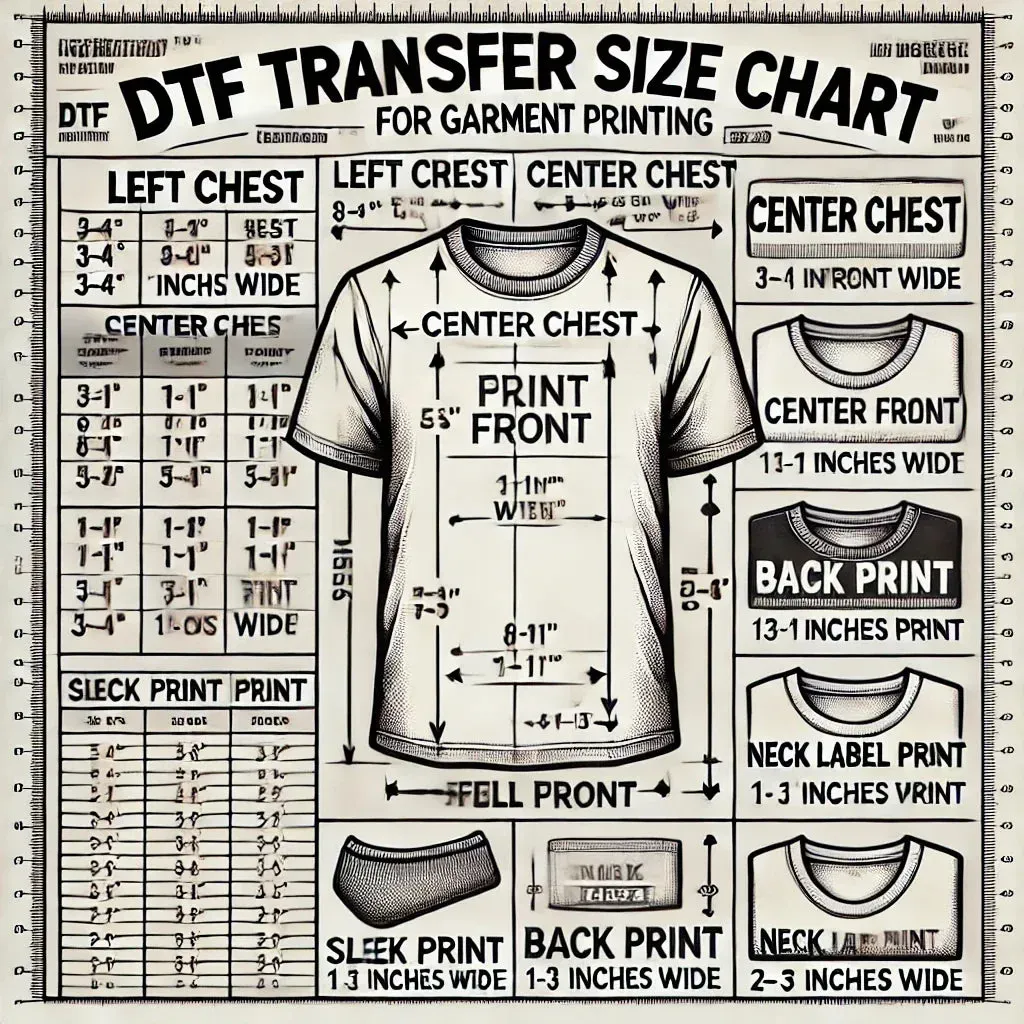
DTF Transfer by Size is reshaping how apparel makers plan their prints, guiding choices from design to final placement. By understanding DTF transfer size and its impact on transfer dimensions, you ensure your artwork reads clearly and sits where it should. A robust DTF printing guide helps translate creative intent into measurable measurements, aligning apparel sizing with the garment’s printable area. Carefully considering scaling and placement lets your design retain its details, with art scaling for DTF to preserve proportions across sizes. Keep the transfer dimensions right and test on representative garments to minimize distortion on tees and hoodies.
Another way to frame this topic is by focusing on the print footprint you assign to each garment rather than the artwork alone. In practice, designers think in terms of usable print area, garment silhouette, and proportions to achieve consistent results. Think of it as matching the image to the fabric’s surface, paying attention to safe margins, curvature, and how the eye perceives scale. Using a structured approach to determine the optimal footprint — sometimes called the transfer footprint or print size for DTF — helps maintain consistency across styles and sizes. Applying this mindset early in the design-to-print workflow reduces revisions and speeds up full-runs.
DTF Transfer by Size: Defining the Right Transfer Dimensions for Every Garment
DTF transfer by size focuses on tailoring the artwork to each garment’s printable area, ensuring the design remains proportional, legible, and visually balanced. By thinking in terms of transfer dimensions and the actual physical size of the print, you can avoid oversized designs that overwhelm the garment or tiny prints that disappear on fabric. This approach integrates the concept of DTF transfer size into every decision from artwork to finished product.
A well-defined transfer size supports consistent results across different apparel categories, from slim tees to roomy hoodies. The DTF printing guide emphasizes standardized sizing rules, so you can maintain quality while accommodating apparel sizing differences. When you decide the right DTF transfer size for each garment, you help the artwork breathe and read clearly on every piece.
Calculating Transfer Dimensions for DTF Printing: A Practical Framework
Start by defining the target print area on the garment, selecting size categories (adult XS-XXL, youth) and a desired width (W) and height (H) based on design intent. Determine the maximum printable area given your equipment and margins (usually 0.25–0.5 inches). This creates a reliable baseline for evaluating transfer dimensions.
Preserve the artwork’s aspect ratio to avoid distortion by using a scale factor (SF) defined as SF = min(W_design, W_printable) / W_design, then applying the same SF to the height. Convert the scaled design measurements to physical transfer size using your printer’s DPI (for example, 1800 px at 300 DPI yields 6 inches). Always include margins and edge safety, then test on similar garments before full production to confirm transfer dimensions meet expectations.
Apparel Sizing and Placement: Aligning Your Artwork with Garment Realities
Size, scale, and placement interact to determine how your design sits on a garment. Apparel sizing informs how large a transfer can be without crowding seams or competing with fabric features. Placement choices—center chest, left chest, back, or sleeve—should align with torso dimensions across sizes and target audiences.
A robust DTF printing guide is essential to translating artwork into practical transfer measurements across sizes and styles. When adapting for different garment types, maintain the design’s aspect ratio, respect margins, and consider seams or pockets that might interrupt the artwork. The goal is a consistent reading experience from a distance, whether on a youth tee or an adult hoodie.
Art Scaling for DTF: Keeping Proportions Without Distortion
Art scaling for DTF focuses on preserving proportions while fitting the target area, so fine details remain crisp and colors stay saturated. Maintaining the aspect ratio prevents unintended stretching or squashing that can ruin the design’s readability.
Use a formal scale factor and DPI-based conversions to map the design to transfer size consistently. If the scaled width is, say, 8 inches, confirm that height scales proportionally and verify the resulting DTF transfer size with a test print before committing to a full run.
Practical Scenarios: From Tees to Hoodies and Beyond
For standard tees and hoodies, smaller sizes require proportional reductions in width and height, while oversized garments may benefit from slightly larger transfer areas to maintain visibility. Rely on apparel sizing guidelines to predict the right transfer size across genders and ages, ensuring the design remains impactful.
When applying to sleeves, backs, or panels with seams, account for garment features that could interrupt the artwork. Avoid busy placements that collide with seams or pockets, and always refer to transfer dimensions to keep the artwork legible and visually appealing across various styles.
Common Pitfalls and How to Mitigate Them with a DTF Printing Guide
Common pitfalls include selecting a transfer size that is too large or too small, ignoring margins, or placing art near seams where distortion can occur. These mistakes reduce edge clarity and color saturation, undermining overall print quality.
Mitigate issues by following a DTF printing guide, running test samples on garments that match your production mix, and validating against the digital proof. Revisit scale factors, margins, and placement if tests reveal blur or color mismatches; align your process with proven transfer dimensions to achieve consistent results.
Frequently Asked Questions
What is DTF Transfer by Size and why is it important for print quality?
DTF Transfer by Size is the practice of choosing the correct transfer dimensions for each garment to preserve detail, color, and placement. It directly affects legibility, edge clarity, and the overall aesthetics of the print. By defining printable width and height, preserving aspect ratio, and accounting for margins, you ensure the artwork reads accurately on every shirt or hoodie.
How do I determine DTF transfer size for a standard adult tee and what are the transfer dimensions to consider?
Start with the garment size and the printable area (width and height). Pick a target size within those limits (for example, 8×6 inches). Use SF = min(W_design, W_printable)/W_design to scale the artwork, then apply the same factor to height. Convert digital measurements to physical size using your printer’s DPI, and include 0.25–0.5 inch margins to determine the final DTF transfer size.
How does art scaling for DTF affect the final transfer size and distortion risk?
Art scaling for DTF should preserve the artwork’s aspect ratio. Use a scale factor to fit the design within the garment’s printable area so neither width nor height exceed limits. This reduces distortion and maintains consistent transfer size, ensuring sharp edges and correct color saturation.
How should apparel sizing influence the recommended DTF transfer by size across different garments?
Apparel sizing affects transfer dimensions: smaller sizes (youth XS, adult XS) usually need smaller transfer widths/heights, while larger or oversized garments can carry slightly larger transfers for visibility. Adjust placement to garment proportions and always respect printable area and seams for optimal results.
What margins and edging considerations should I apply when calculating DTF transfer size?
Add a safety margin around the design, typically 0.25–0.5 inches, to prevent edge bleed during heat press. If your transfer system has a visible border, subtract that border from usable print area. Include these margins in your transfer dimensions to maintain clean edges.
What steps should I take to validate DTF transfer by size before a full production run?
Create test samples on a garment with similar fabric and size, then compare the result to the digital proof. Check edge clarity, legibility, and color saturation; if needed, revisit scale factor, margins, and placement. For best practices, reference a DTF printing guide during validation.
| Aspect | What it means | How it impacts prints | Practical notes |
|---|---|---|---|
| Transfer by Size | Choosing the correct transfer dimensions for each garment | Directly affects legibility, color saturation, edge clarity, and overall aesthetics | Balance with garment silhouette; avoid overpowering the garment or making details unreadable |
| Size | Physical dimensions of the transfer (inches or cm) | Must fit within the garment’s printable area | Consider printable area and edge margins |
| Scale | Proportion of design to garment area | Preserves aspect ratio to prevent distortion | Use a scale factor SF = min(W_design, W_printable) / W_design |
| Placement | Position on garment (chest, back, sleeve, etc.) | Affects visibility and alignment with garment features | Account garment size and audience perspective |
| Step-by-step framework | Method to compute transfer size for chest/front designs | Illustrates workflow from target area to margins | Adaptable to other garment styles |
| Margins and Edging | Safety margins around the design | Prevents edge bleed; ensures clean edges | Typically 0.25–0.5 inches; adjust for borders |
| Testing | Test samples on similar garments | Confirms crisp edges and color saturation | Revisit scale, margins, and placement if issues arise |
| Adaptation across sizes | Adjust width/height proportionally for different sizes | Maintains visibility without distortion | Consider seams/pockets; garment silhouette |
Summary
DTF Transfer by Size is a foundational concept for achieving consistent, high-quality results across different garments. This descriptive overview summarizes why transfer size matters, outlines a step-by-step approach to calculating the right transfer dimensions, and offers practical tips for applying the method to tees, hoodies, and other apparel. By focusing on defining the print area, preserving the artwork’s aspect ratio, converting measurements to transfer size, accounting for margins, and validating with test samples, you can maintain design integrity from youth through adult sizes. The guide also covers adapting to garment features such as seams and pockets to avoid distortion, ensuring legibility and color saturation in varying contexts.